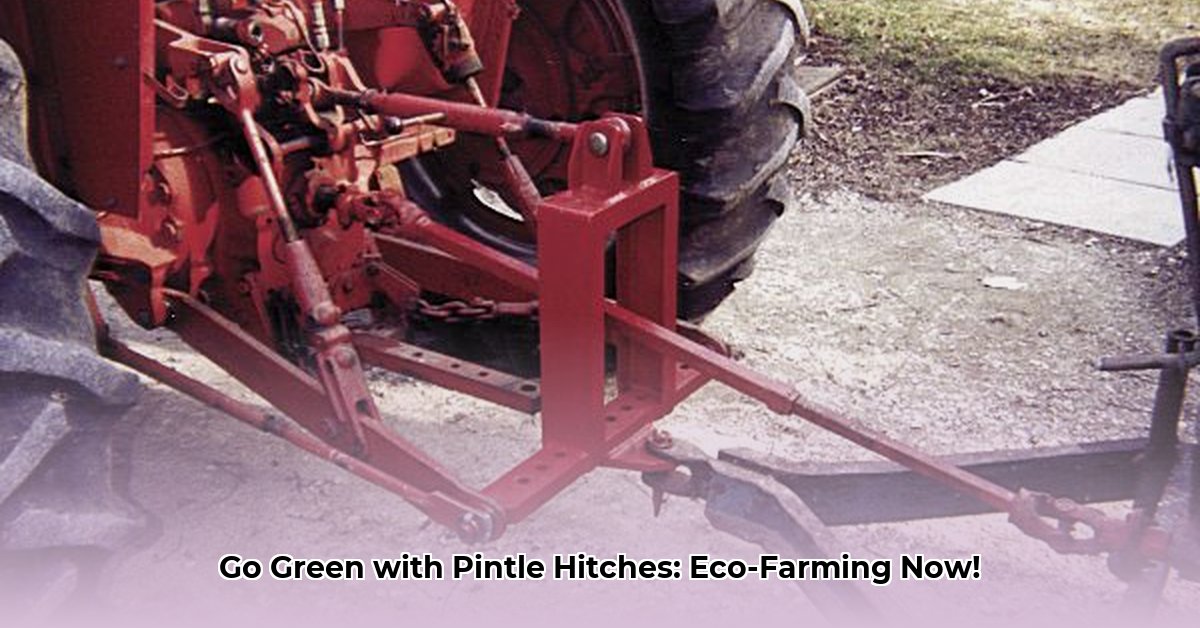
Choosing the Right Pintle Hitch for Your Sustainable Farming Operation
Selecting the appropriate pintle hitch (a type of coupling connecting a tractor to trailers or implements) is paramount for efficient and sustainable farming. This hinges on understanding your tractor's capabilities and the weight of your intended loads. Always consult your tractor's owner's manual for its maximum towing capacity – exceeding this limit is extremely dangerous. Incorrect hitch selection can lead to reduced efficiency and even accidents. Did you know that properly matched hitches can improve fuel efficiency by up to 15%? For smaller operations, consider a garden tractor pull-behind plow.
Begin by determining the Gross Trailer Weight (GTW) and Tongue Weight (TW) of your trailers and implements. The GTW is the total weight of the loaded trailer, while the TW is the weight pressing down on the hitch ball. Your pintle hitch must have a weight capacity exceeding both these figures.
Several pintle hitch types cater to different needs:
- Standard Pintle Hitch: Suitable for lighter implements and general farm tasks.
- Heavy-Duty Pintle Hitch: Designed for heavier loads and challenging terrains.
- Adjustable Pintle Hitch: Offers flexibility for trailers of varying heights.
Here's a comparison table to guide your selection:
| Hitch Type | Typical Weight Capacity (lbs) | Pros | Cons | Ideal Use |
|---|---|---|---|---|
| Standard Pintle | 5,000 - 10,000 | Versatile, relatively inexpensive, readily available | Lower weight capacity than heavier options | Lighter implements, general farm tasks |
| Heavy-Duty Pintle | 10,000 - 20,000+ | High towing capacity, durable construction | More expensive, may be overkill for light use | Heavy implements, large trailers, challenging terrains |
| Adjustable Pintle | Varies depending on model | Adaptable to different trailer heights | More complex installation, potentially more expensive | Trailers and implements with varying heights |
Safe Pintle Hitch Installation and Operation: A Step-by-Step Guide
Safe operation begins with correct installation and regular inspections. Neglecting these steps can lead to accidents. Always prioritize safety.
Step 1: Secure Hitch Mounting: Attach the pintle hitch securely to your tractor's drawbar, ensuring a tight fit. Double-check all bolts and pins.
Step 2: Coupling the Trailer: Align the trailer's pintle hook with the hitch ball. It should fit smoothly and lock securely. A loose connection is highly dangerous.
Step 3: Safety Chains: Always use safety chains crossed in an "X" pattern. These prevent complete detachment if the main hitch fails. This is a critical safety measure, often overlooked.
Step 4: Pre-Trip Inspection: Before each use, visually inspect the hitch, chains, and trailer for any damage or loose components. Address any issues immediately.
Maintaining Your Pintle Hitch: Maximizing Lifespan and Sustainability
Regular maintenance is critical for both safety and sustainability. A well-maintained hitch lasts longer, reducing the need for replacements and minimizing waste.
- Lubrication: Regularly lubricate moving parts to prevent wear and tear.
- Inspection: After each use, thoroughly inspect the hitch for damage.
- Repair/Replacement: Replace worn or damaged parts promptly.
Sustainability Considerations: The Environmental Impact of Pintle Hitches
Sustainable farming practices extend to every aspect of your operation, including your equipment. Choosing a pintle hitch impacts your environmental footprint in several ways:
- Material Selection: Opt for hitches made from recycled or sustainably sourced materials whenever possible. Lighter-weight but strong materials reduce fuel consumption.
- Reduced Fuel Consumption: Efficient towing, enabled by a properly selected and maintained hitch, directly leads to lower fuel consumption and reduced emissions. Remember: Every drop counts.
- Waste Reduction: A durable, well-maintained hitch minimizes the need for frequent replacements, reducing waste.
"Choosing durable, sustainable components is vital. It's not just about the initial purchase; it's about the long-term environmental impact," says Dr. Emily Carter, Professor of Chemical and Biomolecular Engineering at Princeton University.
Future Trends and Innovations in Sustainable Pintle Hitch Technology
Ongoing research focuses on developing lighter, stronger, and more sustainable materials for pintle hitches. Smart sensor technology may soon be integrated, providing real-time monitoring of weight and hitch condition, enhancing both safety and efficiency. These advancements will further reduce the environmental impact of agricultural operations. The future of sustainable agriculture relies on such technological innovation.